
As a professional eco friendly pouch bags manufacturer in china with over 14 years of experience in the packaging industry and nearly 7 years specializing in compostable bag production, we have witnessed drastic tightening plastic restriction policies across Europe, America and other regions in recent years. A large number of import packaging wholesalers and brand OEM custom clients are forced to switch to eco-friendly packaging due to environmental regulations and plastic bans. Many buyers have encountered severe losses simply by choosing unqualified suppliers, including cargo detention by customs, administrative fines, products barred from retail shelves, and failed local waste recycling audits.
Last year, one of our Italian clients searched for packaging bags for cricket goods but could not distinguish core differences covered in Biodegradable vs Compostable Bags: How Long To Break Down. He mistakenly cooperated with a supplier providing uncertified biodegradable bags instead of authentic compostable alternatives. As a result, his goods were seized by customs for mismatched labeling and missing official compostable certifications, followed by substantial financial penalties. Therefore, when he reached out to our team for consultation, beyond basic inquiries about quotations and lead times, his most critical questions focused on: the distinctions between biodegradable and compostable bags, accurate degradation timelines of both products, and whether their degradation performance complies with local regulatory rules and commercial procurement standards.
This blog clearly unpacks core definitions of biodegradable and compostable packaging, verified degradation durations under different environments, EU & US regulatory standards, and targeted procurement solutions. The content targets four major overseas B2B buyer groups: packaging import wholesalers, brand OEM purchasers, independent website & cross-border e-commerce sellers, and offline retail chain operators.
Table of Contents
Ⅰ: Core Definition Differentiation
Ⅱ: Degradation Cycles Under Different Environmental Conditions
Ⅲ: Core Pain Points & Customized Solutions
Ⅳ: Our Factory’s Core Competitive Advantages
Ⅴ: Summary & Consultation Guidance
Ⅰ: Core Definition Differentiation
Most overseas packaging buyers face customs detention and fines because they fail to fully grasp the gaps between these two bag types before selecting a compostable bag manufacturer. This section sorts degradation mechanisms, market access thresholds and key regulatory disparities based on international standards: bolded anchor texts with hyperlink references include ISO 14855 Standard (https://www.iso.org/standard/74994.html), EU EN13432 Official Standard Document (https://standards.iteh.ai/catalog/standards/cen/e2c66c1f-8856-4e76-804e-9ddd46d97024/en-13432-2000) and US ASTM Industry Standard D6400 (https://store.astm.org/standards/d6400).
1、Definition: Biodegradable bags form a broad category without restrictions on degradation environments, timeframes or soil ecotoxicity. The only requirement is full decomposition via natural microorganisms such as bacteria, fungi and algae, breaking down into carbon dioxide, water and biomass. No fixed degradation timeline or strict environmental prerequisites are mandated for this product range, and labeling with the term “Compostable” is strictly forbidden.
Degradation Mechanism: Natural microbial enzymes passively break down polymer molecular chains; decomposition only activates when temperature, humidity and microbial density reach sufficient levels.
Basic Industry Standards: Complies with loose universal standard ISO 14855, with no mandatory maximum degradation period or unified heavy metal control limits. Degradation residues do not require ecotoxicity testing.
2、Definition: Compostable bags are a subcategory of biodegradable packaging that must achieve full degradation within designated composting environments. Our bamboo-fiber certified compostable bags, supplied by professional custom eco friendly bags manufacturer, fall under this high-standard compliant product range.
Degradation Mechanism: Manufactured from a blend of pure bamboo fiber powder, food-grade PLA and PBAT plant-based raw materials. They rapidly break down in high-concentration compost microbial environments, producing non-toxic humus that nourishes soil without environmental harm.
Basic Industry Standards: Must meet mandatory global certifications including EU EN13432, US BPI and OK Compost Home. Qualified compostable products need to satisfy three rigid benchmarks: complete degradation within specified time limits, zero toxic residual substances, and no inhibition of normal plant growth.
Key Note on Distinction: All compostable bags are biodegradable, but not all biodegradable bags qualify as compostable.
| Comparison Dimension | Biodegradable Bags | Compostable Bags |
| Core Definition | Broad category of degradable bags, only require full breakdown by natural microbes; forbidden to label as “Compostable” | Subcategory of biodegradable packaging, must fully degrade in specified composting environments |
| Degradation Restrictions | No limits on degradation environment, time, soil ecotoxicity; no fixed degradation timeline or strict environmental prerequisites | Must degrade in designated compost microbial environments with clear time limits; raw materials are bamboo fiber powder + food-grade PLA + PBAT |
| Degradation Mechanism | Natural microbial enzymes passively split polymer chains; decomposition only triggers when temp, humidity, microbe quantity hit enough levels | Rapidly decomposed in high-concentration compost microbes; generates non-toxic humus to fertilize soil with zero environmental damage |
| Industry Standards & Certifications | Follow loose standard ISO 14855; no mandatory max degradation period, unified heavy metal limits or ecotoxicity residue tests | Must pass mandatory global strict certifications: EU EN13432, US BPI, OK Compost Home; meet 3 rigid benchmarks |
| Mandatory Benchmarks | No rigid unified benchmarks | 1. Fully degrade within regulated time 2. Zero toxic residual substances 3. No harmful soil impact |
3、Three core discrepancies trigger cargo detention, administrative fines and failed waste recycling audits for overseas buyers:
(1)Customs Classification Differences: EU, US and Canadian customs categorize ordinary biodegradable bags as conventional plastic packaging with extremely strict inspection rules. Certified compostable bags are classified as eco-friendly packaging with far lower customs inspection thresholds.
(2)Market Access Rules: The EU, USA and Canada ban uncertified biodegradable bags from organic waste sorting and recycling systems. Only compostable bags with valid EU EN13432 and US BPI certifications can circulate and be sold legally.
(3)Legal Liability Boundaries: If importers label ordinary biodegradable bags as compostable for import, the importing buyer bears full legal responsibility — this is the primary reason most overseas purchasers and OEM brand partners receive fines.
Ⅱ: Degradation Cycles Under Different Environmental Conditions
1、Degradation Timeline in Natural Outdoor Environments
Biodegradable bags: Full decomposition takes 2–5 years. Many low-grade variants only fragment into microplastics instead of complete breakdown, creating major compliance risks.
Compostable bags: Certified compliant compostable bags answer the common search query how long does a compostable bag take to break down — fully degrade within 6–12 months in natural settings, generating zero microplastic fragments during decomposition and meeting global environmental standards.
2、Degradation Period in Standard Industrial Compost Facilities
Test environment for industrial composting: Controlled 55–60℃ high-humidity conditions, the mainstream commercial waste treatment channel adopted by municipal authorities across Europe and North America.
Biodegradable bags: Only partial degradation occurs within 180–360 days, with a degradation rate below 90%. They fail industrial compost audits and do not meet industry qualification standards.
Compostable bags: 100% full decomposition within 90–120 days, fully compliant with EU EN13432 and US BPI certification requirements.
3、Degradation Timelines for Home Compost & Overseas Warehouse Storage
Home Compost Scenario: Ordinary biodegradable bags require 1.5–3 years to break down fully. Our bamboo-fiber compostable bags certified under EN13432 and BPI complete full degradation within 180–270 days for backyard compost systems. Many buyers also ask can you put biodegradable bags in compost — uncertified biodegradable products will not fully break down in home compost and contaminate compost piles.
Overseas Warehouse Storage Conditions: Uncertified biodegradable bags age and rupture within 6 months in humid warehouse environments, easily damaging stored goods. Our certified bamboo fiber compostable bags maintain structural stability for over 12 months during cross-border warehousing, meeting cross-border logistics performance metrics without spontaneous degradation or cargo damage.
Ⅲ: Core Pain Points & Customized Solutions for Four Types of Overseas Buyers
1、Core Pain Points for Import Purchasers & Wholesalers: Certification compliance, avoiding customs seizure and administrative fines
Mandatory Document Checklist for Customs Clearance: EU EN13432 compostable certification or US BPI certification, PPWR packaging test report, RoHS heavy metal-free inspection report, REACH non-toxic chemical compliance certificate, PFAS fluorine-free test report.
Label Printing Compliance Rules: Customs strictly penalize printing “Compostable” logos or text on uncertified biodegradable bags — this ranks as the top violation inspected at border control.
As a reliable gift bags eco friendly manufacturer, our factory provides a one-stop full set of certification documents to support global buyers through all customs audit procedures.
2、Core Pain Points for Brand OEM Buyers: Scenario matching of two bag types, procurement cost gaps, screening compliant packaging suppliers
Recommended Application Scenarios: Certified bamboo fiber compostable bags are ideal for private brand packaging, cosmetic packaging and premium retail lines. Ordinary biodegradable bags suit internal auxiliary factory packaging only.
Recommended Application Scenarios: Certified bamboo fiber compostable bags are ideal for private brand packaging, cosmetic packaging and premium retail lines. Ordinary biodegradable bags suit internal auxiliary factory packaging only.
Supplier Screening Guidance: Prioritize source manufacturers with complete certifications, stable production capacity and fully traceable raw material supply chains.
3、Core Pain Points for Cross-Border & Independent Store Sellers: Alignment with local waste recycling standards, support for small-batch custom orders
Recycling Standard Compatibility: Certified compostable bags are fully accepted by organic waste sorting systems across the EU, United States and other Western markets.
Flexible Customization Service: Operating as a professional eco friendly drawstring bags manufacturer, our factory maintains stable production capacity to deliver flexible OEM custom solutions. We adjust dimensions, gram weights and logo printing to match unique brand positioning, supporting full cooperation from design sampling to mass production under one roof.
4、Core Pain Points for Physical Retailers & Chain Brands: Compliance with municipal waste sorting rules, alignment with premium brand image positioning
Regional Product Matching: North American offline retail chains should select compostable bags with US BPI certification; EU retailers require products holding EN13432 certification.
Brand Empowerment Services: As an experienced eco friendly branded tote bags manufacturer, we offer custom printed brand logos, graphics and eco-friendly labeling to elevate brand image for offline high-end retail chains.
Ⅳ: Our Factory’s Core Advantages of Bamboo Fiber Compostable Bags
1、Complete Import & Export Customs Certifications: We hold EU EN13432 compostable certification, PPWR packaging compliance qualification, RoHS heavy metal-free test reports, REACH non-toxic chemical certificates, PFAS fluorine-free inspection documents and optional FSC forestry certification. All credentials are directly applicable for customs clearance, supermarket listing and e-commerce platform qualification audits, delivering stable, reliable compliance support for global eco-packaging buyers.
2、Flexible Minimum Order Quantities: Sample orders starting at just 100 units perfectly fit market testing demands for cross-border sellers and offline retail chains. We also support full-container large-volume OEM custom orders for major global brands.
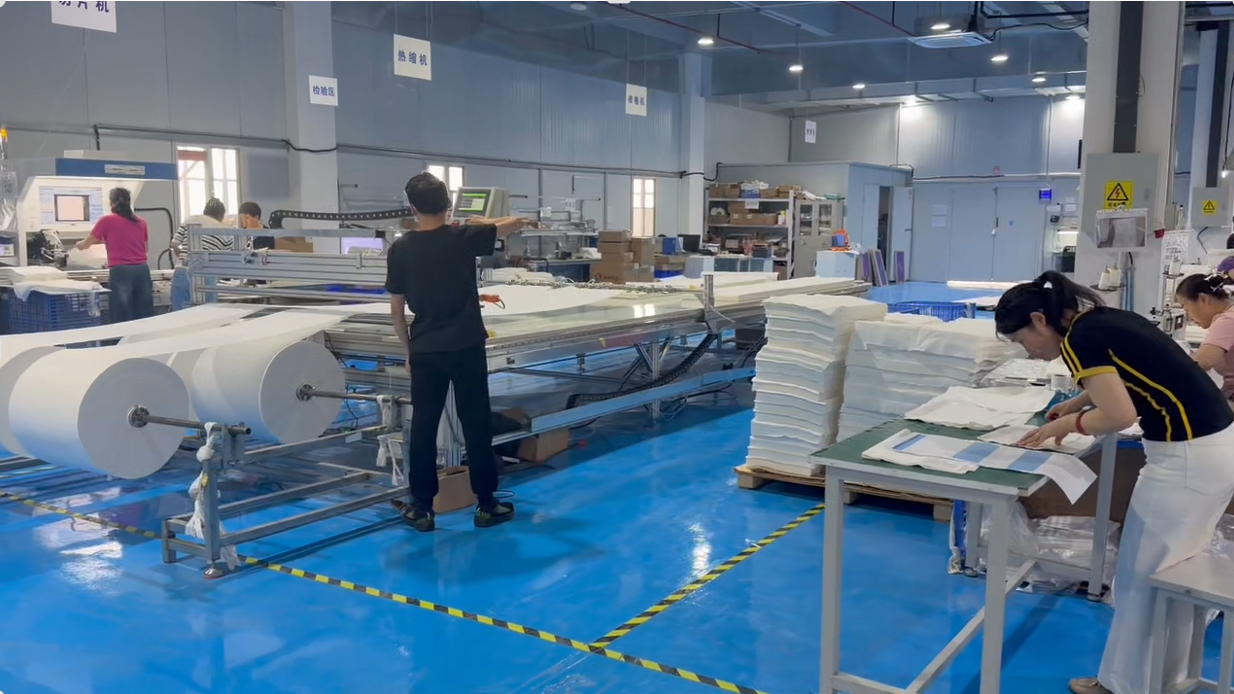
3、Multi-Angle Customization Solutions: Customizable dimensions, material gram weights, logo & graphic printing, plus bag structure designs including open-top pouches, flip-top sacks and drawstring bags.
4、Additional Supporting Services: Long-term stable mass supply capacity, custom sample design service, one-stop sorting and compilation of all customs clearance documentation.
Ⅴ: Summary & Consultation Guidance
1、The core gap analyzed in biodegradable bags vs compostable bags extends far beyond simple degradation timeframes, covering cross-border legal compliance, local waste recycling standards and applicable commercial scenarios.
2、Ordinary uncertified biodegradable bags lack standardized degradation timelines, operate under loose industry rules and carry high customs compliance risks — they are only suitable for non-commercial use and factory internal auxiliary packaging.
3、Certified compostable bamboo fiber bags manufactured at our factory feature fully verifiable degradation data, full alignment with global regulatory frameworks, and meet all commercial packaging requirements for overseas buyers worldwide.
4、For bulk B2B overseas custom purchasers and premium offline retail chains, certified compostable bamboo fiber bags deliver the lowest-risk eco-packaging solution on the market.
5、If you require further support, leave your inquiry immediately to receive one-on-one scenario matching consultation covering dimension customization, logo & graphic printing, sample testing and OEM quotation requests. Our dedicated foreign trade team and technical R&D team fully guide your whole project to eliminate risks of customs detention and fines entirely.